

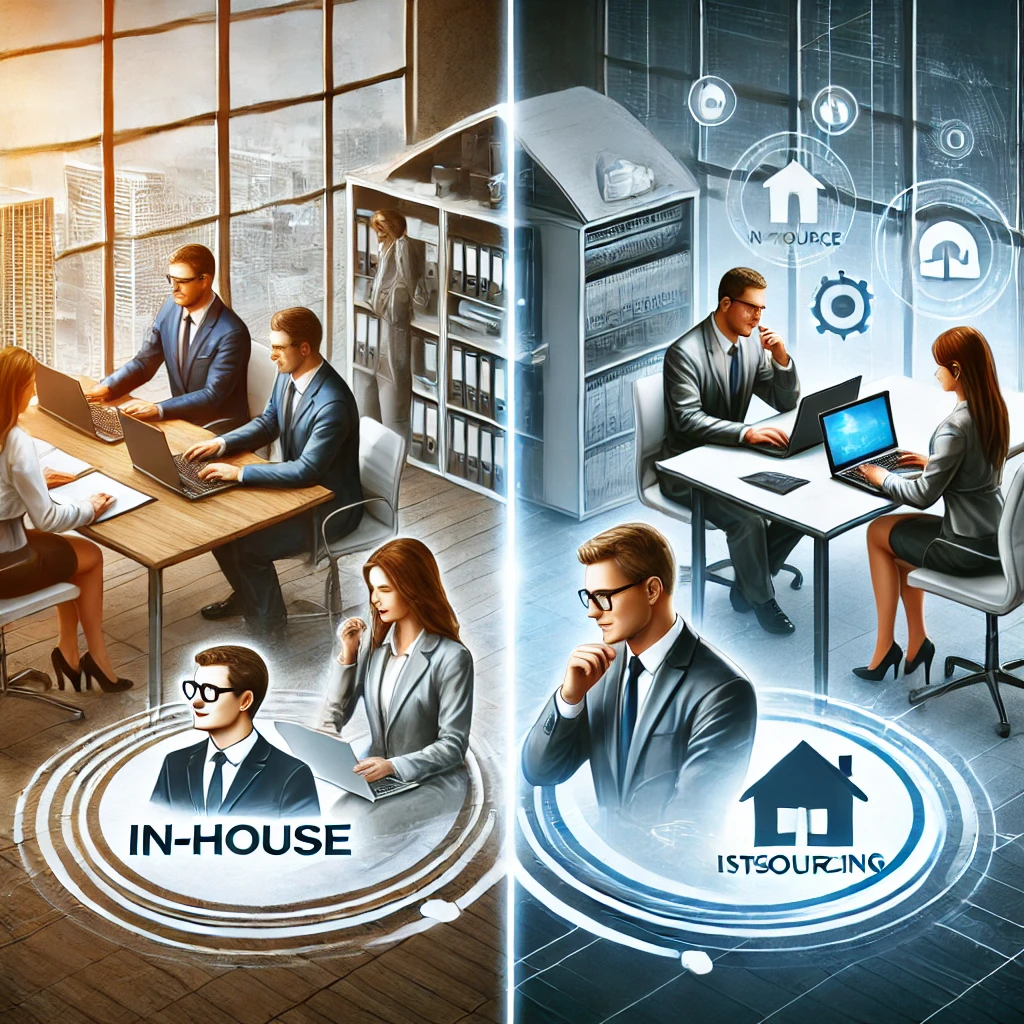
In today’s fast-paced digital landscape, businesses of all sizes are constantly making decisions about how to best manage their IT infrastructure and services. One of the most critical choices organizations face is whether to rely on in-house employees or to partner with outsourcing agencies for their IT needs. With the rapid evolution of technology and the growing demand for cost-effective and scalable solutions, understanding the benefits and drawbacks of each option is essential for any business looking to stay competitive. In this blog, we will compare the pros and cons of in-house employees and outsourcing agencies in the IT industry, helping you make an informed decision that aligns with your business goals.
At SetoPixel, we specialize in providing high-quality IT outsourcing solutions that guarantee 100% ROI, making us a trusted partner for businesses seeking to optimize their IT strategies. But whether you choose in-house or outsourcing, it’s crucial to understand the unique benefits of each option. Let’s dive in.
In-House Employees: Advantages and Disadvantages
Advantages:
- Full Control Over Operations: One of the primary benefits of hiring in-house employees for IT functions is the direct control your business gains over operations. With an internal team, you have the ability to make decisions in real-time and ensure that everyone is aligned with the company’s culture and values.
- Direct Communication and Collaboration: In-house employees can interact with other departments more effectively, fostering smoother communication and collaboration. This immediate access can lead to quicker decision-making and problem-solving.
- Better Security: With sensitive company data and intellectual property in-house, businesses often feel more confident about the security of their information. Employees working in-house can be subject to company-specific security protocols that offer more control over data protection.
- Innovation and Long-Term Commitment: In-house teams are often more invested in the company’s success. They have a deeper understanding of the organization’s goals and can contribute to long-term innovation strategies. Additionally, employees who stay with a company for extended periods tend to offer valuable continuity.
Disadvantages:
- High Costs: Maintaining an in-house IT team can be expensive. Salaries, training, benefits, and hardware costs can add up quickly. Furthermore, hiring top-tier talent for every specialized IT function can drain resources.
- Limited Expertise: In-house employees are often limited to specific skill sets. This means your company may need to hire additional staff or continually train existing employees to cover all the various IT areas, from cybersecurity to software development.
- Scalability Issues: As your business grows, scaling an in-house IT department can be challenging. Hiring more employees requires additional resources, time, and effort, while also complicating team management.
- Recruitment and Retention Challenges: The process of recruiting and retaining skilled IT professionals can be a time-consuming and costly endeavor. With the constant evolution of technology, your team must continually upgrade their skills, which can lead to higher turnover rates and additional costs.
SetoPixel’s Solution: At SetoPixel, we understand the challenges businesses face with managing in-house IT teams. Our outsourced IT services allow you to tap into a wealth of expertise without the high costs of maintaining a full in-house team. Contact us to see how we can optimize your IT functions at a fraction of the cost.
Outsourcing IT Services: Advantages and Disadvantages
Advantages:
- Cost-Effectiveness: One of the key reasons businesses turn to outsourcing is cost savings. By outsourcing IT functions, businesses can reduce overhead costs, such as salaries, benefits, and infrastructure. This makes outsourcing an attractive option for small to medium-sized enterprises (SMEs) looking to stay competitive while managing costs.
- Access to Global Talent: Outsourcing IT allows businesses to access a global talent pool. Whether you need a cybersecurity expert, cloud engineer, or software developer, outsourcing agencies provide access to top-tier professionals who can bring specialized skills to your project.
- Scalability and Flexibility: Outsourcing gives businesses the flexibility to scale up or down based on their needs. If your IT needs grow, an outsourcing agency can quickly provide additional resources without the hassle of hiring and training new employees.
- Focus on Core Business Activities: Outsourcing non-core activities like IT allows your team to focus on your company’s primary goals. By freeing up internal resources, you can prioritize activities that directly contribute to growth and profitability, such as marketing, sales, and customer service.
- Faster Time to Market: Outsourcing allows businesses to speed up the development process by leveraging experienced teams who are already proficient in their specific areas. As a result, outsourcing can help bring your products or services to market faster.
Disadvantages:
- Less Control: One of the most significant downsides to outsourcing is the loss of direct control over operations. When working with an outsourcing agency, businesses must trust that the agency’s team will follow the guidelines and deliverables set by the business.
- Communication Barriers: Working with an external team, particularly across different time zones, can result in communication challenges. This may lead to delays, misunderstandings, or misalignment on project goals.
- Dependence on External Vendors: Outsourcing means your business is dependent on a third-party vendor. This could be problematic if there are any issues with the agency’s performance or if there is a breakdown in the working relationship.
- Quality Concerns: Not all outsourcing agencies deliver the same level of quality. If businesses are not careful in choosing the right outsourcing partner, they may face issues related to subpar work, missed deadlines, or lack of expertise.
SetoPixel’s Solution: At SetoPixel, we alleviate the risks commonly associated with outsourcing. We ensure high-quality, on-time delivery, clear communication, and a transparent working process. With our 100% ROI guarantee, you can trust that your IT outsourcing will be seamless and beneficial to your business.
In-House vs. Outsourcing IT Services: A Comparative Analysis
Let’s take a closer look at how in-house employees and outsourcing agencies compare across several key factors:
Cost-Effectiveness:
When it comes to cost, outsourcing IT services tends to be far more economical than hiring in-house employees. Outsourcing eliminates the need for salaries, training, and infrastructure costs. Plus, with SetoPixel’s tailored outsourcing solutions, you can expect unmatched value with a 100% ROI guarantee.
Expertise and Skillset:
In-house employees may have a solid understanding of your business, but they might not possess the specialized knowledge required for every IT function. Outsourcing gives you access to a wider pool of experts, ensuring that you get the best talent for specific tasks. SetoPixel’s team of professionals can handle everything from network security to custom software development.
Scalability:
Outsourcing IT services offers unmatched scalability. As your business grows, you can easily scale up your IT operations by simply adding more resources through your outsourcing agency. This flexibility is not as easily achieved with an in-house team.
Speed and Efficiency:
Outsourcing can significantly accelerate project timelines. With an external team of experts working on your IT needs, you can focus on your core business activities while they handle the technical aspects. SetoPixel has a proven track record of delivering projects on time and within budget.
Control and Security:
If control and security are your main priorities, in-house employees may seem like the better option. However, outsourcing agencies like SetoPixel take data security seriously, ensuring compliance with industry standards and offering robust security measures.
Case Study: Successful Transition from In-House to Outsourcing IT
A medium-sized e-commerce company faced challenges with their in-house IT team, which struggled to keep up with the growing demands of their business. After evaluating their options, they decided to outsource their IT services to SetoPixel. The result? A significant reduction in costs, faster project turnaround, and improved IT infrastructure. With SetoPixel’s team handling everything from website development to cybersecurity, the business was able to focus on growth and customer satisfaction.
Conclusion: Making the Right Choice for Your IT Needs
When deciding between in-house employees and outsourcing agencies for IT services, it’s important to weigh the pros and cons of each option. While in-house teams offer control and direct communication, outsourcing provides cost savings, access to specialized talent, and scalability. If your business is looking for a reliable partner to manage IT efficiently and effectively, outsourcing to a trusted agency like SetoPixel may be the right choice for you. With our expertise and 100% ROI guarantee, we ensure that your IT needs are met with the highest level of professionalism.
